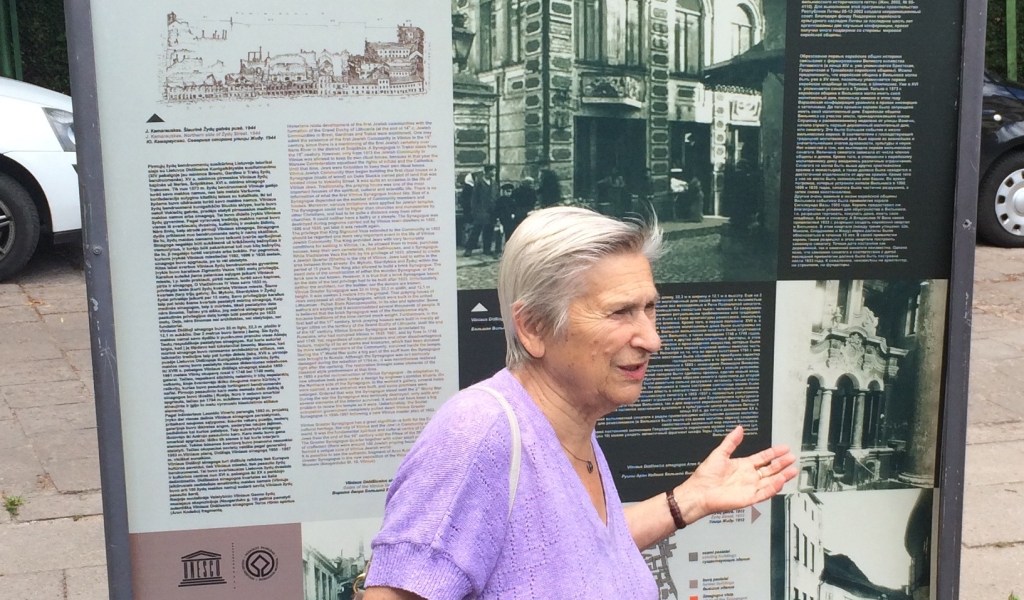
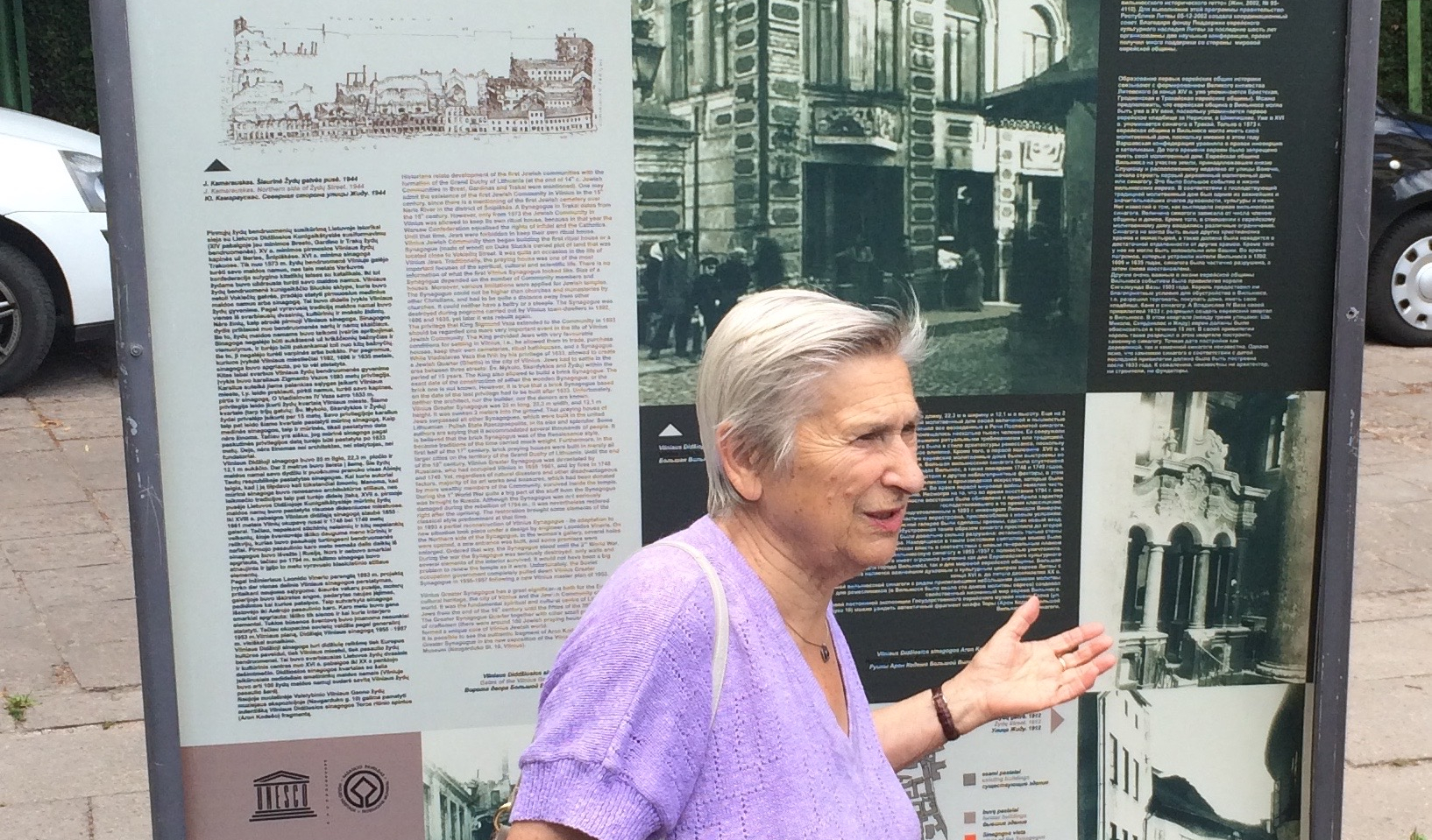
Fania Brantsovsky’s title at the Vilnius Yiddish Institute is librarian, but it probably should be legend, or living memory. She was raised in Vilna, went into the ghetto with her family in 1941, escaped in 1943 and fought with the Jewish partisans until 1945. After the war she worked as a statistician. The other day she led us on a tour of the ghetto area, the tiny few blocks where Jews were packed into overcrowded buildings and from which tens of thousands were taken to be shot in the Ponar forest.
Fania was among the luckier ones; as a young woman she was put into work details, lining shoes and knitting garments for German soldiers. This meant she was allowed to live, unlike children, the sick and elderly whom the Nazis gradually exterminated. Fania showed us the building that formerly housed the Jewish library, which remained in active use during the entire ghetto period, and whose basement provided a hidden place for the ghetto’s resistance fighters to train and plan their escape.
Fania’s story, which has been covered extensively, is both inspiring and complicated, caught up in the strange latter-day politics of Holocaust memory. That aside, she remains, at 93, astonishingly vital, clear-headed and energetic. Not only did she walk us a brisk 2+ miles around old Vilna without a rest, she spoke throughout in a geshmak, Litvish Yiddish that is becoming only too rare. Give a listen:
 ACassel's Pages