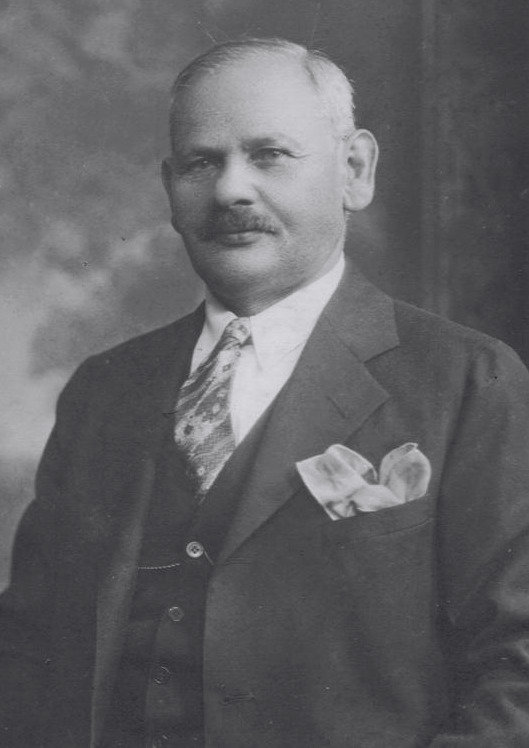
My grandfather, Boruch Chaim Cassel, was born in Keidan, then part of the Russian empire, in 1877, and arrived in New York in 1904. He had served as a clerk in the Russian army and worked as a bookkeeper in Riga, but his first business enterprise in the U.S. was a candy store. The photos below show him as a young man in the military (playing the autoharp, right); with his close friend from Keidan, Aaron Leib Pick; and in front of his store on St. Anne’s Ave. in the south Bronx.


By 1914 he had entered the import-export business, starting a firm called the Russian-American Agency of Commerce. Here (below) he is in his office, sitting opposite an assistant, Ceil Duberstein, whose sister Anna he married in 1916.

Trade with Russia dried up after the Bolshevik revolution of 1917, of course, and subsequently B. Cassel had to find other ways to make a living. Printing and office supply sales seem to have sustained him, more or less, although his sons remembered him struggling through the 1930s. Several ventures –including an attempt to export consumer goods to the growing Jewish community in Palestine – were unsuccessful. By the mid-1930s, therefore he relied on his wealthier in-laws to help support his family, while devoting a larger share of his energy to his work editing The Keidaner, the bulletin of his landsmanshaft, the club of people from his hometown, which by then was part of independent Lithuania.

By 1940, in addition to editing the monthly bulletin, he was also contributing short memoirs recalling the Keidan of his youth. Written in Yiddish, they portrayed scenes likely to resonate with the men of his generation, and which serve today as tiny windows into the Jewish small-town world of Eastern Europe.

 ACassel's Pages