
Jill Lepore argues in The New Yorker that the Kent State shootings, of which today is the 50-year anniversary, followed by those at Jackson State in Mississippi, followed by the “Hard Hat Riot” in New York (in which construction workers beat up student antiwar protesters) began a civil war that continues today, with Trump’s shock troops storming state capitols in camo vests and “MAGA” hats.
I wouldn’t argue with Lepore. For pretty much my entire adult life, a fault line has run through the country, with (among other things) civil rights, sexual equality and openness to immigrants on one side; and nationalism, megachurches and the 2nd amendment, etc., on the other.
All of which is simply to justify a little wallowing in nostalgia. I was a college sophomore that spring, and one early May evening my film-history class was invited to the home of our teacher, a visiting professor named Arthur Mayer. Mayer had spent a life as a fill producer, publicist and exhibitor, and in his later years shuttled between USC in California and Dartmouth in New Hampshire, teaching a class that mainly consisted of listening to his stories about Hollywood and its bizarre characters.
But that evening the discussion had little to do with movies. Arthur and his wife Lillie, both well into his 80s, spent the evening commiserating with us about the day’s horrible headline: Nixon’s move to widen the war in Vietnam by ordering the bombing of Cambodia. The move had already sparked protests at colleges across the country, and one the campus of Kent State in Ohio, National Guard troopers had responded with bullets, killing four students.
Arthur and Lillie urged us to act. Don’t go to class; get out there and march. Raise hell, they said. And we did, sort of. Starting the next day (as I remember it) mass meetings were held on the central green. Arthur himself joined in as students and faculty voted to shut down the school. He’s the white-haired guy in the center of the photo below.
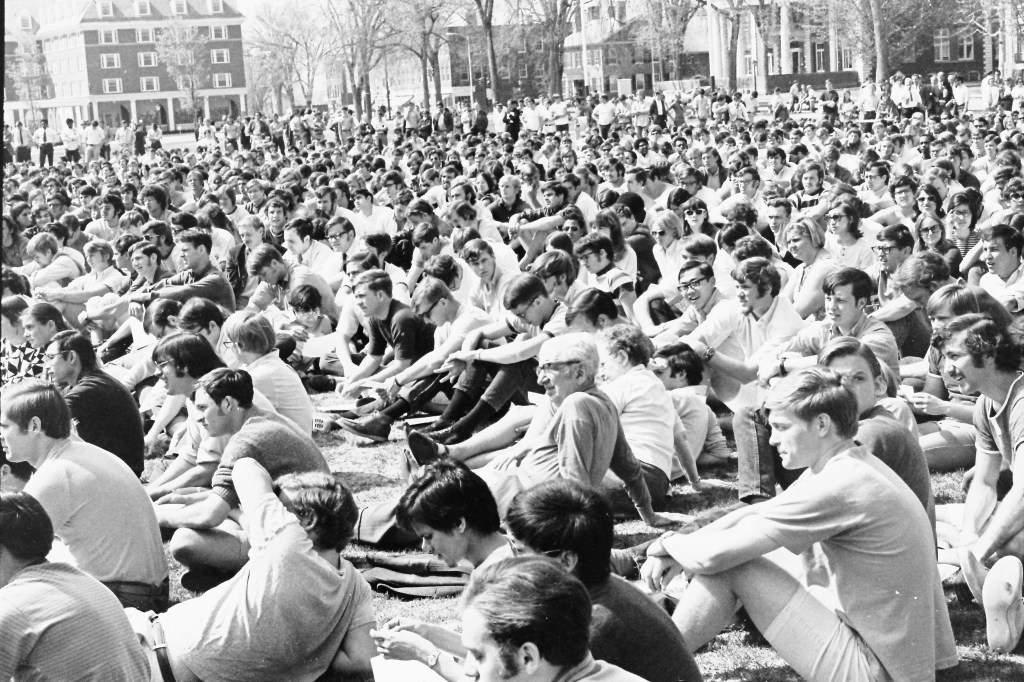
With a month to go in the term, classes were cancelled, and students dispersed – some to lobby in Washington, some to organize antiwar rallies in their home towns. We were told to seek out alumni – a privileged, middle-to-upper-class group in general – and persuade them to join the antiwar cause. Some of us formed guerilla theater troupes; my group quickly put together a ragged revival of Irwin Shaw’s “Bury the Dead” – an antiwar play from the 1930s – and toured small towns in Vermont and New Hampshire for a week.
Did we do any good? Probably not much. Perhaps we added to the pressure that, eventually, led Nixon and Kissinger to wind the war down and end the draft. Perhaps we helped set off the reaction, starting with the Hard Hat Riot, that gave Nixon his aborted second term, and later gave us Reagan, Bush and Trump.
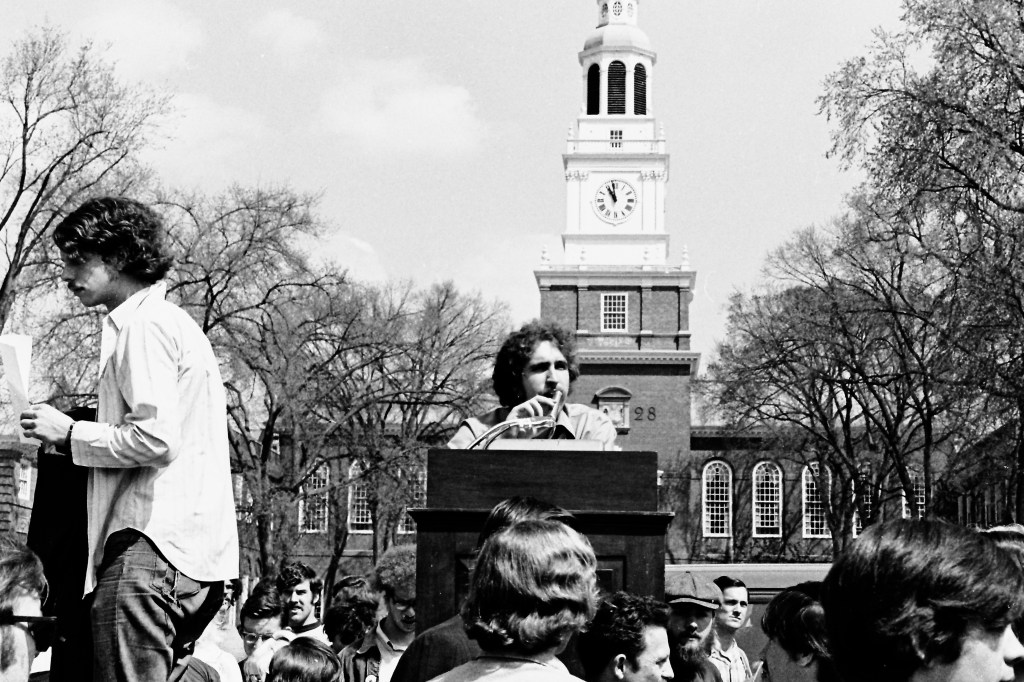
Mass student meeting on the Dartmouth Green, May 1970 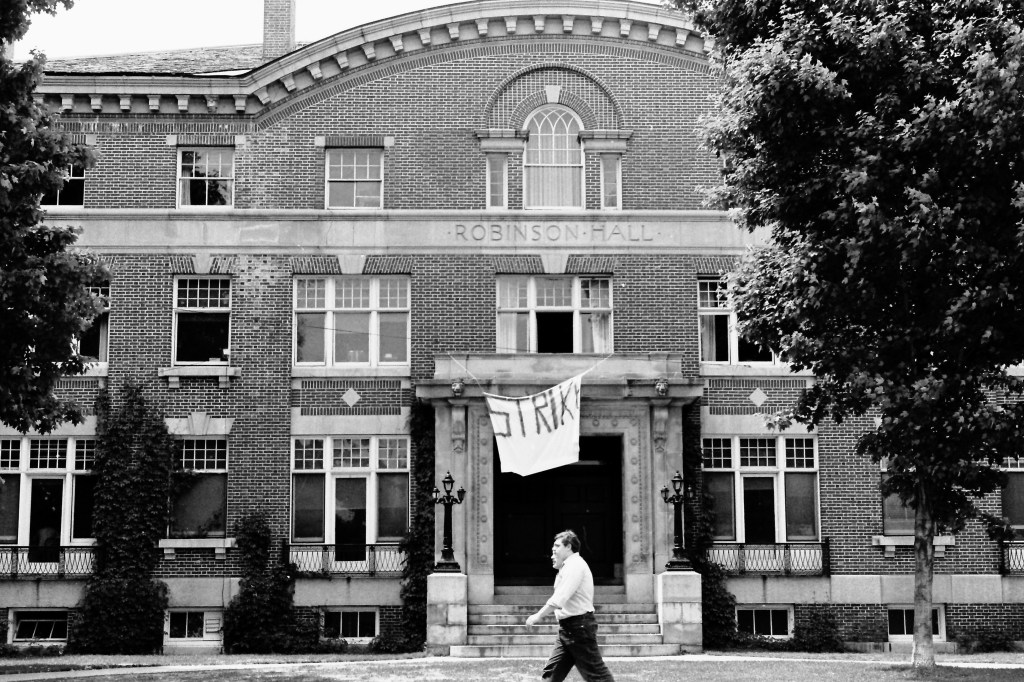
Student activities building 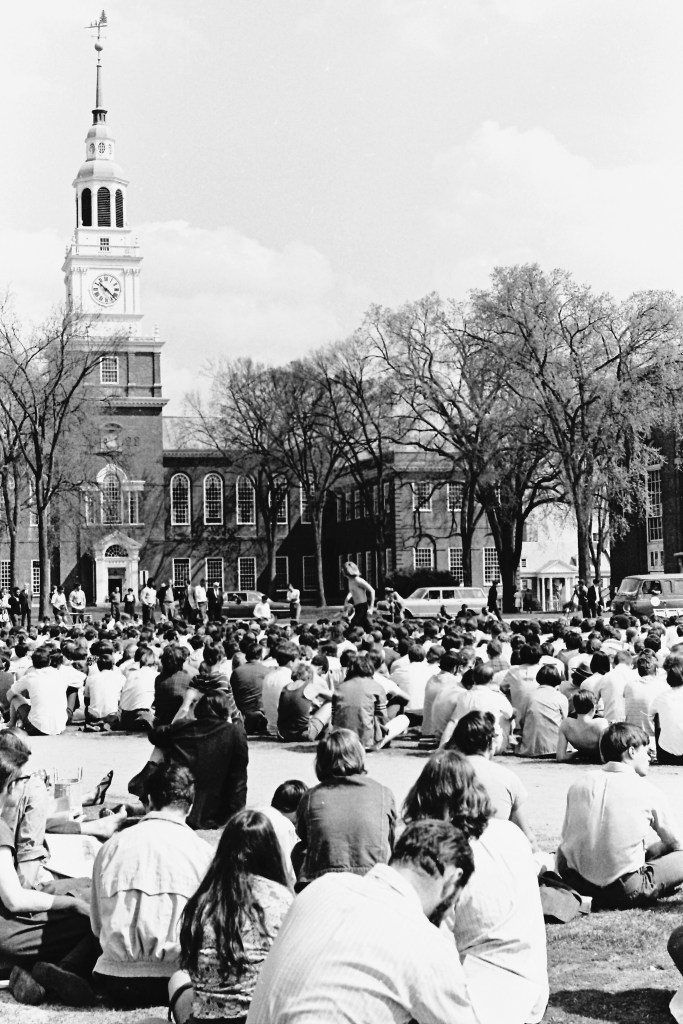
Strike vote, May 1970 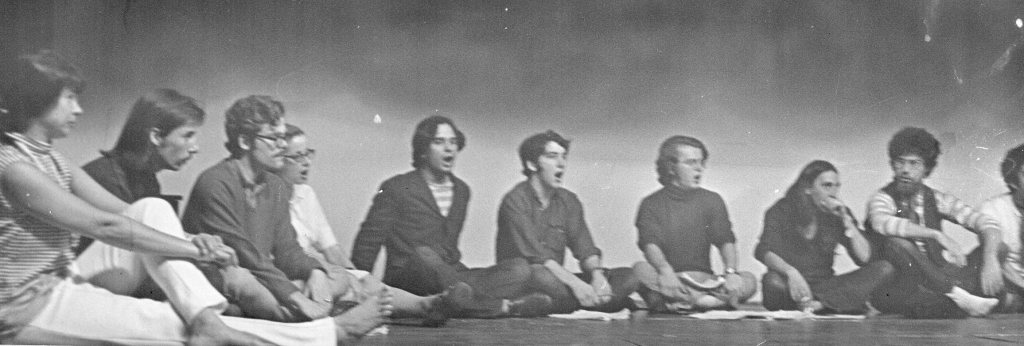
Performing Irwin Shaw’s “Bury the Dead”
 ACassel's Pages
Leave a comment