Category: Vilnius 2015
-
Reunion
When I came to Vilnius in 1995, Regina Kopilevitch was just beginning her career as a guide and researcher for Jews visiting Lithuania. Yesterday she took several Yiddish Institute students around the city, demonstrating the same deep knowledge, insight and wit that made that long-ago visit so memorable for me. She’s practically an institution here…
-
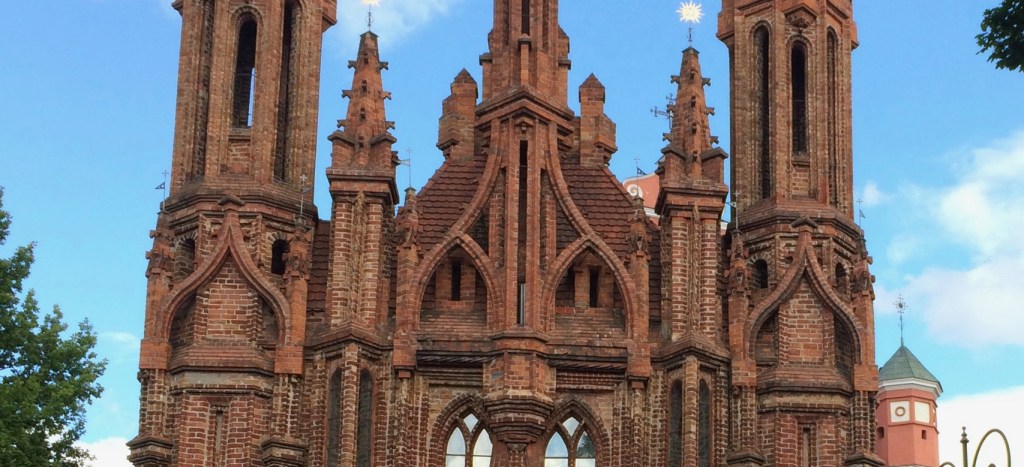
Churches
You can’t throw a rock in old Vilnius without hitting a church, not that anyone should throw rocks at churches, of course. Last night I stood with a few hundred others in the nave of St. Casimir’s, a gorgeous Renaissance-era structure, and heard a wonderful organ concert. There are all kinds of churches here; Catholic, Russian…
-
Frank Zappa
On a quiet Vilnius corner, not far from the old city center, a statue of Frank Zappa has stood since 1995. Why? This is a popular question.
-
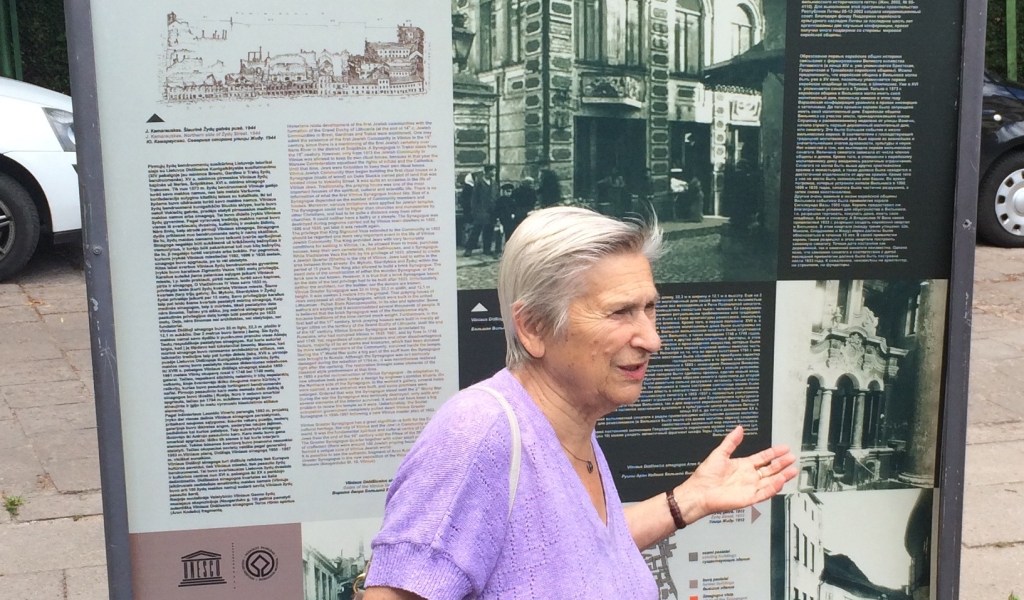
Fania
Fania Brantsovsky’s title at the Vilnius Yiddish Institute is librarian, but it probably should be legend, or living memory. She was raised in Vilna, went into the ghetto with her family in 1941, escaped in 1943 and fought with the Jewish partisans until 1945. After the war she worked as a statistician. The other day…
-
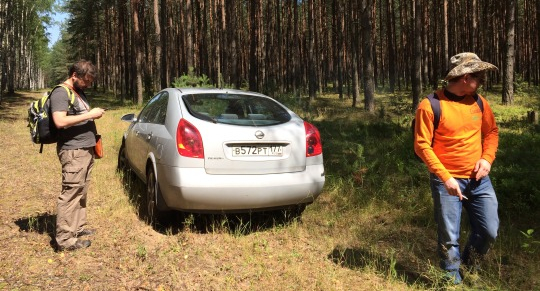
Mushroom hunting
A lovely warm day in the forest, about 20 miles south of Vilnius toward the border with Belarus. Dima — a Russian former newspaper editor who lives here, and whose acquaintance I owe to the inestimable John Pancake — his friend Mischa, my American friend Ellen (who instigated my coming here in the first place) and I…
-
Proletarians
Talk about bad timing. Among the strongest memories of my visit here 20 years ago are – were – some massive Soviet-era hero statues, one each on the four corners of a bridge over the Neris River. Workers, peasants, soldiers, students. Proletarians all, earnestly building the socialist state. Turns out they were torn down just…
-

Main Street
A main drag doesn’t tell you everything about a city, but it does tend to concentrate activity, and thus become part of the local narrative. This is Gedimino Prospekt, roughly Vilnius’ Champs Élysées – or Broad St., if you prefer a Philadelphia analogy. In Tsarist times it was St. Georgjius Ave. After World War I,…
-
Eating Yiddish
Speaking of eating, classes began yesterday at the Vilnius Yiddish Institute’s summer program, my reason for coming here. Inexplicably, I am in the advanced class, which means that after two days my head is about to explode. The teachers are scholarly, erudite and eloquent. Following along is like holding on to a roller coaster with…
-

New food
You’d think, living in the cosmopolitan foodie U.S., that the chance of running across something totally new and unknown to eat would be fairly small. South Asian, East Asian, Ethiopian, Peruvian, been there, done that, check check check. But it’s a big world, and apparently a lot remains out there to be tasted. Witness last…
-
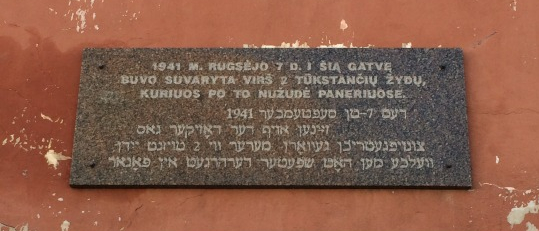
Ghosts
No one can be here long without feeling burdened by history. Over the last century, Vilnius’ national identity changed half a dozen times, with control passing among Russia, Poland, Germany and the Soviet Union as well Lithuania, which won and lost its independence several times. In the process, hundreds of thousands of people were slaughtered, exiled…
 ACassel's Pages